
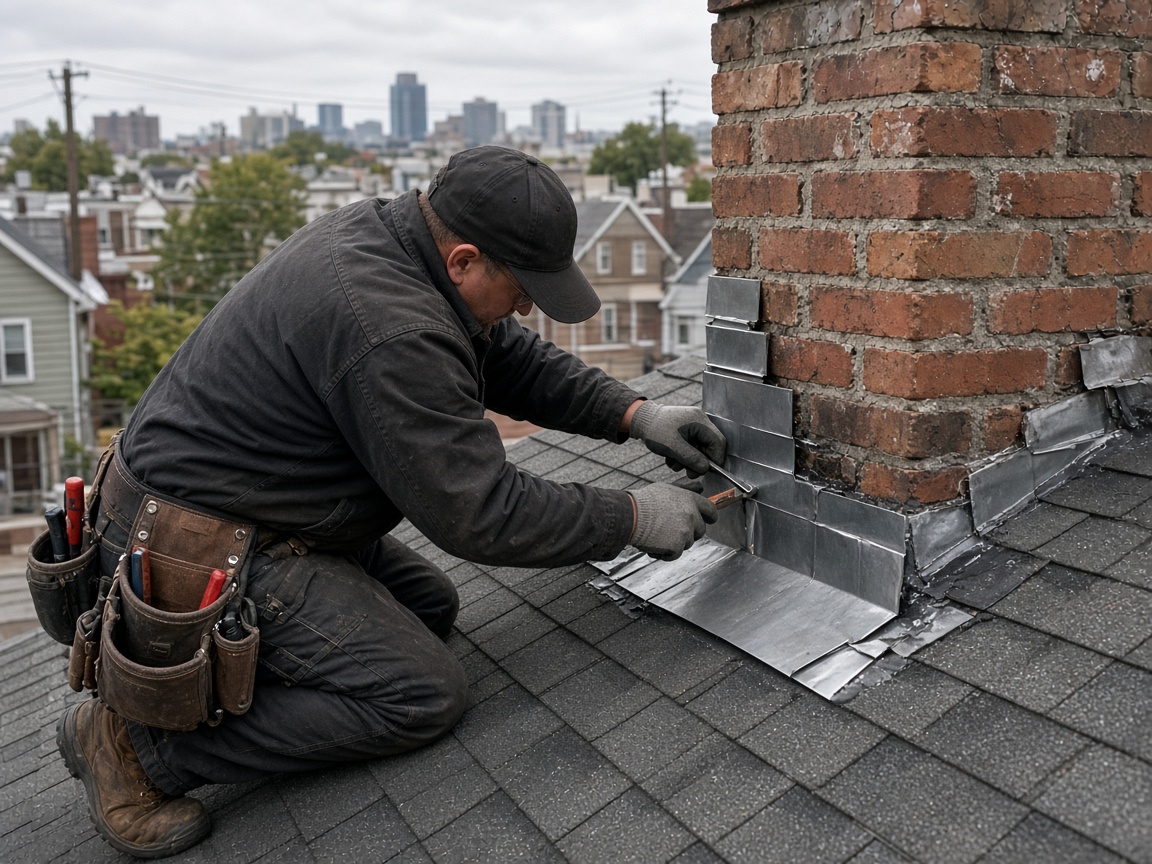
Newark's older brick and frame homes in neighborhoods like the Ironbound and University Heights often feature chimneys installed decades ago with original lead or galvanized flashing that has corroded from repeated freeze-thaw cycles. Cold winter temperatures followed by warm humid days cause expansion and contraction that cracks sealant and lifts edges, allowing water to enter attic spaces near Newark Penn Station or the Prudential Center area. Proper repair requires matching the existing roof pitch and using compatible metals to avoid galvanic corrosion on asphalt shingles common throughout Essex County.
Homeowners in Vailsburg and Weequahic frequently discover flashing failures only after interior staining appears because the damage hides under roof planes that slope toward the chimney. We inspect for deteriorated counter flashing embedded in masonry joints and replace it with new step flashing that integrates with the existing shingle courses. In humid summers, trapped moisture accelerates wood rot in rafters, so repairs include checking ventilation paths around the chimney to prevent mold growth that spreads quickly in Newark's climate.
Work near Newark Liberty International Airport or along routes to Jersey City and Elizabeth must account for wind-driven rain that pushes water under poorly sealed flashing joints. Technicians remove old flashing without disturbing the chimney crown, install new copper or stainless step flashing, and seal with high-temperature caulk rated for New Jersey winters. This approach prevents recurring leaks that otherwise require repeated roof repair newark nj calls in Central Ward and South Ward homes.
Technician insight
In Newark, the thing that catches most people out with Chimney Flashing Repair is freeze-thaw damage to the original lead flashing on pre-war brick chimneys in the North Ward and Central Ward where winter temperatures drop sharply then warm quickly.
Water Stains After Winter Storm
A Vailsburg homeowner noticed ceiling stains following a cold snap. Inspection revealed cracked lead flashing around the chimney where ice had lifted the edges. We removed the damaged sections, installed new copper step flashing and resealed the joints. The attic stayed dry through the next several rains.
Chimney Flashing Repair Services We Offer
✓Lead Flashing Replacement
Removes corroded lead step flashing on older Newark chimneys and installs new code-compliant lead that matches existing roof planes in Ironbound and North Ward homes.
✓Copper Chimney Flashing Installation
Fits new copper counter flashing into masonry joints to resist Newark's freeze-thaw cycles while providing a long-lasting seal on homes near Branch Brook Park.
✓Rubber Boot Flashing Repair
Replaces cracked rubber boots around chimney pipes that fail from UV exposure and temperature swings common in Essex County summers and winters.
✓Step Flashing Integration
Reinstalls step flashing under shingles to direct water away from the chimney base, preventing attic leaks in University Heights and Vailsburg properties.
✓Counter Flashing Reset
Resets loose counter flashing in brick joints and reseals with high-temperature materials suited to Newark's humid subtropical conditions.
Chimney Flashing Repair Cost in Newark, NJ
| Service | Typical Range | What Affects It |
|---|---|---|
| Basic Flashing Repair | $250–$450 | Single chimney on one-story home; price rises with height or multiple chimneys |
| Copper Flashing Replacement | $400–$750 | Material upgrade; varies by roof pitch and neighborhood access |
| Rubber Boot Replacement | $150–$300 | Pipe-only repair; lower when combined with full flashing job |
| Full Chimney Flashing Overhaul | $600–$950 | Includes crown inspection and multiple sides; higher on two-story homes in Ironbound |
Ranges are typical for Newark, NJ and confirmed with an exact written quote before any work starts.
How it works
- 1
Site Inspection
Examine chimney, roof pitch and existing flashing condition from the attic and exterior on Newark properties.
- 2
Material Selection
Choose compatible metals such as copper or lead based on the home's age and roof type in Essex County neighborhoods.
- 3
Old Flashing Removal
Carefully remove deteriorated flashing without damaging masonry or shingles common on older Newark homes.
- 4
New Flashing Installation
Install step and counter flashing with proper overlaps and high-temperature sealant rated for local winters.
- 5
Final Seal and Cleanup
Test the repair during a water spray and clean the work area before leaving the site.
Pricing
Upfront quotes provided after on-site inspection; final price depends on chimney height, access and material choice.