
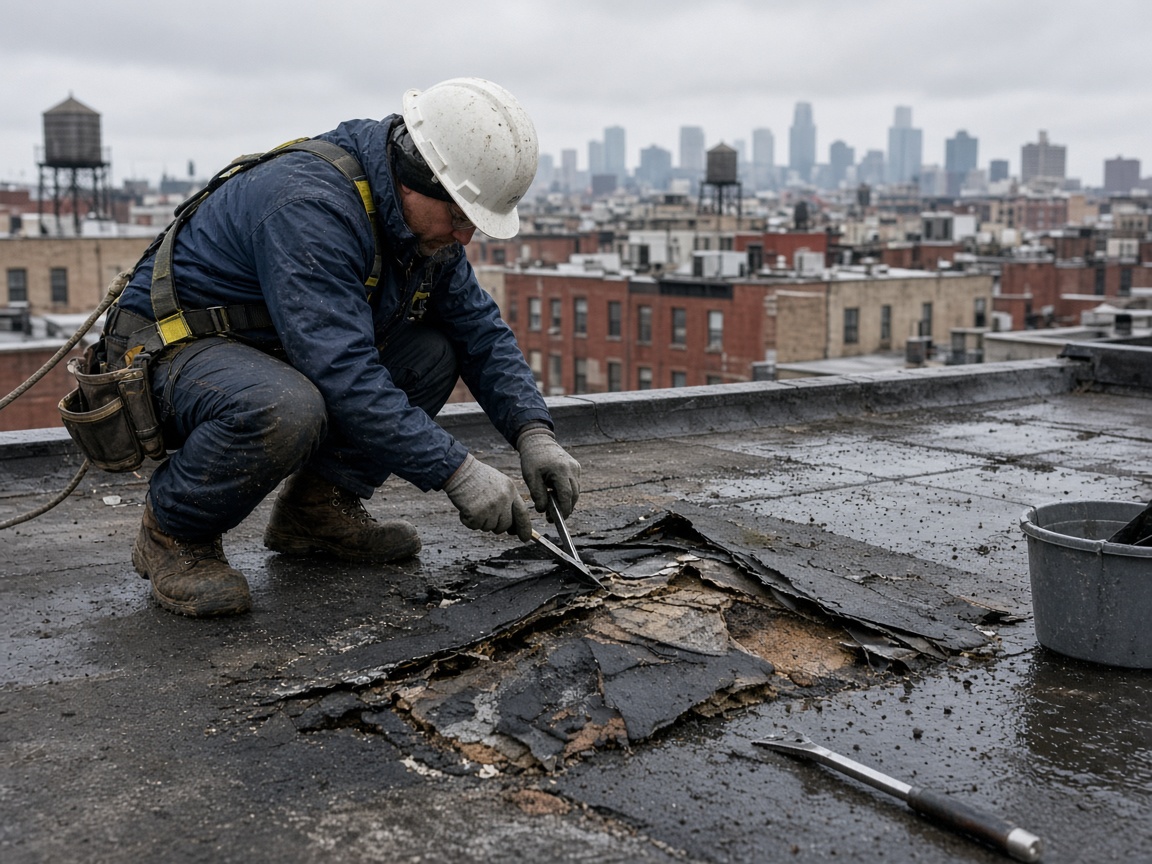
Newark’s older housing stock in neighborhoods like the Ironbound and North Ward often features asphalt shingle or modified bitumen roofs installed decades ago. Cold winters bring ice dams along eaves while humid summers and sudden thunderstorms drive water under flashing at chimneys and valleys. Emergency calls frequently originate from properties near Branch Brook Park or close to Newark Penn Station where tree cover and vibration from rail lines accelerate wear.
A proper emergency response starts with a visual inspection from the ground and attic to locate active leaks without creating new openings. Technicians carry rolls of reinforced tarp, furring strips, and self-adhesive flashing to create a temporary watershed that directs water away from living spaces. In the South Ward and Vailsburg, crews must also account for steeper pitches on older two-family homes that make footing more hazardous during high winds.
After securing the roof, the team documents conditions with photos for insurance adjusters and schedules a permanent repair once weather stabilizes. Delaying the call often turns a small flashing failure into widespread ceiling damage, especially in University Heights buildings with flat sections that pond water. Local codes in Essex County require any structural decking replacement to meet current wind-load standards, so emergency crews note these details for the follow-up crew.
Technician insight
In Newark the thing that catches most people out with Emergency Roof Repair is the hidden rot under old slate-look shingles on North Ward two-families; once you pull the tarp you find the deck has been wet since the last nor’easter and the job turns from a quick seal into a full section replacement before the next freeze.
Wind-driven leak near Newark Penn Station
A Central Ward homeowner noticed water staining after a summer thunderstorm. Inspection showed lifted shingles at a valley where vibration from trains had loosened nails. Crew installed a reinforced tarp and sealed the valley edges the same afternoon, stopping interior dripping until full replacement the following week.
Emergency Roof Repair Services We Offer
✓Storm Damage Tarping
Install reinforced tarps over missing shingles or punctures to stop water intrusion until permanent materials arrive.
✓Active Leak Containment
Locate and temporarily seal interior and exterior leak points in Ironbound and Downtown Newark row homes before ceilings collapse.
✓Emergency Flashing Repair
Replace or reseal step flashing and counter flashing around chimneys and skylights damaged by winter ice or high winds.
✓Shingle Blow-Off Repair
Re-secure or replace wind-lifted shingles on North Ward and Weequahic homes after coastal storms moving through Newark Liberty flight paths.
✓Ice Dam Emergency Service
Remove ice dams and install heat cable or improve ventilation to prevent recurring leaks in older Central Ward and Vailsburg roofs.
Emergency Roof Repair Cost in Newark, NJ
| Service | Typical Range | What Affects It |
|---|---|---|
| Emergency tarp installation | $350–$750 | Varies by roof pitch and stories; higher on two-family homes in the South Ward. |
| Flashing reseal or patch | $275–$600 | Depends on access around chimneys near rail lines or tree cover. |
| Ice dam removal and prevention | $400–$900 | Includes heat tape on older Weequahic and Vailsburg properties. |
| After-hours or weekend response | Add $150–$300 | Available Saturday until 2pm; Sunday calls referred to next business day. |
Ranges are typical for Newark, NJ and confirmed with an exact written quote before any work starts.
How it works
- 1
Call Intake
Answer within business hours, note exact address in Newark or nearby Elizabeth, and dispatch a truck from the Gateway Center location.
- 2
On-Site Assessment
Inspect from attic and roof edge, identify active water paths, and photograph damage for insurance.
- 3
Temporary Securement
Apply tarps, sealants, or mechanical fasteners to create an immediate watershed over the affected section.
- 4
Follow-Up Scheduling
Provide written report and book permanent repair once weather allows full material delivery.
Pricing
Most emergency tarping and leak containment calls in Newark fall between a few hundred and low thousands depending on roof height and extent of active water.